




-1.png?width=400&name=CMS%20(23)-1.png)

At QBank we see a lot of different files and formats every day, and you probably do as well. It’s a part of the digital landscape that everybody encounters. In a series of three parts we will guide you through frequently used files.
A frequently asked question is which file formats QBank supports, as most programs only are compatible with a certain set. The short answer is that QBank operates just as your normal file system on your hard drive; it can store any file. Any file on your storage devices can be uploaded to QBank. The long answer is that some files and formats are better suited to use as originals, an important aspect in the DAM perspective.
This is the first of three blog posts in a serie about media formats and we will focus on delivery and intermediate formats. In the next two blog posts we will look closer at Screen vs. Print, and Streaming vs. Direct Play.
Delivery vs. Intermediate Formats
In a DAM, it is very important to differentiate delivery from intermediate formats. A delivery format is a format that should be used when a file is complete. The file won’t be edited any more and is ready for use by others. An important aspect is that the delivery format is easy to consume by an end user. No specialized software is needed to open it.
On the other hand, an intermediate format is meant to be used when editing is still an option. Intermediate formats are usually the save format of any editing software, eg. text, image and video editing.
As a rule of thumb, delivery formats are the ones that probably have the most use in a DAM context. However intermediate formats do have their use but usually for a more limited audience.
Examples of common Delivery and Intermediate Formats
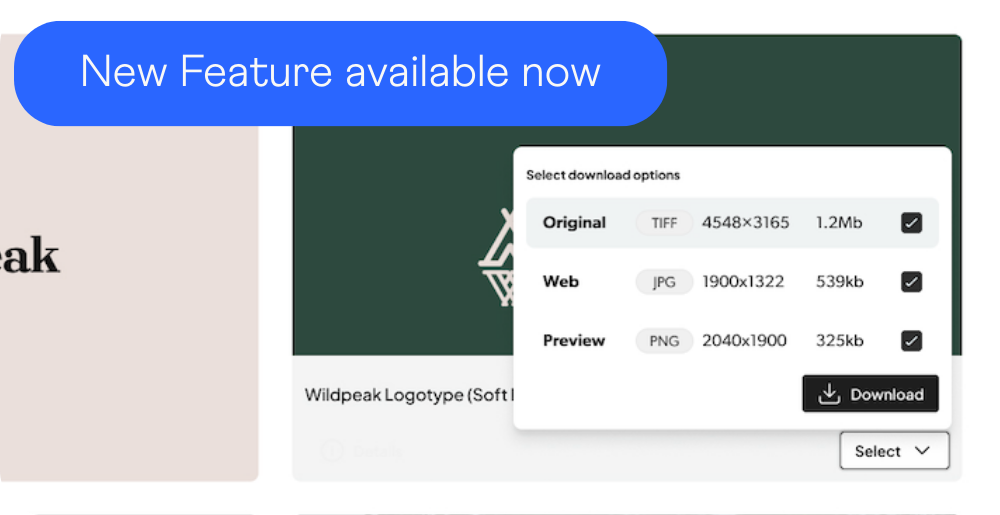
For images the most famous intermediate format is the Adobe Photoshop's PSD. PSD-files contains a lot information important for further editing within Adobe Photoshop while they are hard for an end-user to view. Common delivery formats are TIFF, PNG, GIF and the ubiquitous JPG.
When talking about documents there are in practice just one delivery format, PDF. TXT can also be considered a delivery format, as well as an intermediate, but is much too simple for anything but a snippet. A format that often is treated as a delivery format, but actually is an intermediate is Microsoft Word’s DOCX. On most platforms Microsoft Word is required to open it.
Video formats are a dime a dozen these days and to make matters worse a single file extension can contain multiple different encodings. The icing on the cake is that you must consider both the audio and video. The takeaway is to trust the experts' recommendations and fallback to the fact that QBank can handle most formats and convert to industry standards if needed.
Next time we will focus on Screen vs. Print, don't miss it!
Learn more on how to make the best of your QBank in our Knowledge Base.