








Resources / Free DAM Dream Team guide
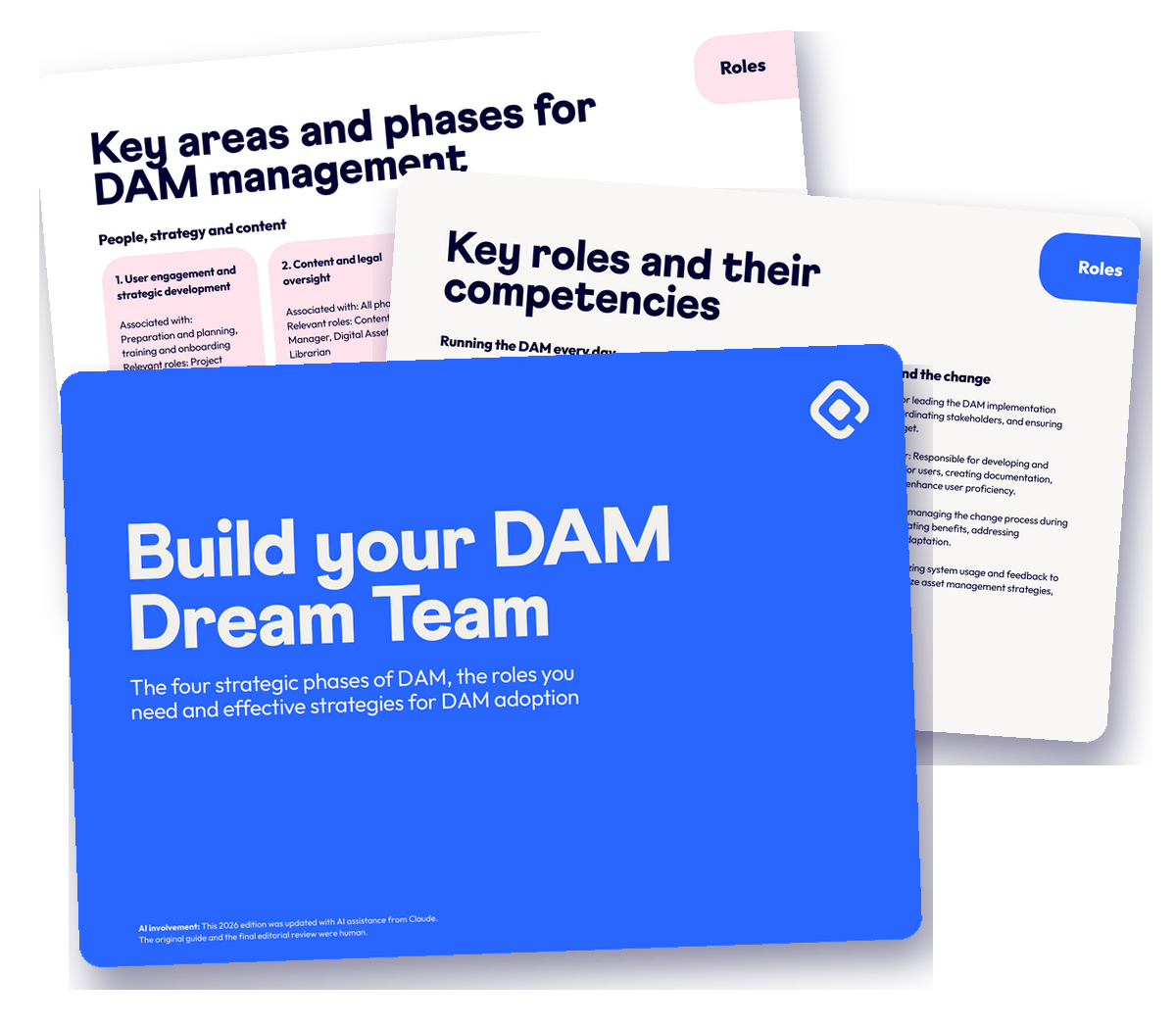
Free guide: Build your DAM Dream Team
A DAM works best when everyone works as one team
A DAM is not just a marketing tool. E-commerce, product, IT, sales, service and partner teams all depend on it, and it works best when they work together as one team.
This guide walks you through the four strategic phases of DAM, the roles you need and effective strategies for DAM adoption.
The four strategic phases
From preparation and planning to operation and optimization. Each phase builds upon the last.
Eight roles in four key areas
From DAM Administrator to Data Analyst: what each role does and when it matters most.
Built for small teams too
Three people can cover all eight roles. Use the team planner at your kickoff.
Strategies for adoption
Practical strategies for each phase, from stakeholder buy-in to DAM ambassadors.
Why your DAM needs a Dream Team
Digital Asset Management (DAM) is crucial for streamlining operations and boosting business value in different departments and sectors. It involves organizing, managing, and sharing digital assets like images, videos, and documents.
Implementing and managing a DAM system requires strategic planning and operational understanding. A mix of technical, strategic, and managerial skills is crucial. For successful adoption and long-term effectiveness, organizations must establish roles with individuals possessing specific competencies.
The four strategic phases of DAM
By dividing the process into four strategic phases, organizations can methodically build, implement, and optimize their DAM systems to meet specific business needs.
- Preparation and planning. Evaluate your organization's current digital asset needs, set clear goals and form two essential teams: the Control Group and the Project Group.
- Implementation and customization. Tailor the DAM to your organization: storage, metadata schemas, user access controls, integrations and user roles.
- Training and onboarding. Hands-on training, DAM ambassadors and early feedback collection.
- Operation and optimization. Daily management, continuous improvement and regular training updates.
Key roles and their competencies
Running the DAM every day: DAM Administrator, Content Manager, Digital Asset Librarian and IT Support Specialist. Good metadata is also what lets AI tools find the right content.
Leading the project and the change: Project Manager, Training and Support Coordinator, Change Manager and Data Analyst.
A DAM Owner is crucial for efficient management and strategic alignment of your DAM system. This role bridges the gap between technical functionalities and business objectives.
Small team, same Dream Team
The eight roles fall into the four key areas. A team of three can cover all of them:
- DAM Owner: Project Manager, Change Manager, Training and Support Coordinator.
- Content lead: Content Manager, Digital Asset Librarian, rights and usage.
- System lead: DAM Administrator, IT Support Specialist, Data Analyst.
Add DAM ambassadors in each department that uses the DAM, so every team has a go-to person.
Download the full DAM Dream Team guide
Get the 17-page guide in three chapters:
- Chapter 1: the four phases of setting up a DAM system, and key factors to consider for your successful DAM journey
- Chapter 2: the essential roles you need for your DAM Dream Team and how to bring everyone together with a common goal
- Chapter 3: effective strategies to get everyone excited and involved
Includes a team planner: define who, in which phase, and how many hours a week for each role.
Effective strategies for DAM adoption
Preparation and planning: Engage stakeholders early for broad organizational buy-in. Conduct a needs assessment to define clear objectives. Develop a roadmap with measurable objectives and timelines.
Implementation and customization: Customize the DAM system to fit organizational needs. Implement strong security measures. Define clear governance procedures for how digital assets are managed, who has access, and how rights and usage are controlled.
Training and onboarding: Create tailored training sessions, including security practices. Appoint DAM ambassadors. Gather and implement user feedback early.
Operation and ongoing optimization: Regularly monitor performance and security. Update security and governance policies as needed. Keep training materials up-to-date. Foster a culture of continuous improvement.
AI under human review
If you use AI for tagging or search, let the DAM team review its suggestions regularly. People stay in charge of approvals, rights and what gets published.
Frequently asked questions about DAM teams
Who should be on a DAM team?
A DAM team covers eight roles: DAM Administrator, Content Manager, Digital Asset Librarian, IT Support Specialist, Project Manager, Training and Support Coordinator, Change Manager and Data Analyst. A DAM Owner holds it all together.
What are the four phases of a DAM implementation?
Preparation and planning, implementation and customization, training and onboarding, and operation and optimization. Each phase builds upon the last.
What does a DAM Owner do?
The DAM Owner sets strategic goals, ensures the system supports organizational needs, coordinates communication, monitors performance, and drives DAM adoption. The role bridges the gap between technical functionalities and business objectives.
Can a small team run a DAM?
Yes. A team of three can cover all eight roles: a DAM Owner, a content lead and a system lead. Add DAM ambassadors in each department that uses the DAM.
What is the difference between the Control Group and the Project Group?
The Control Group consists of stakeholders from every department. It gathers requirements and ensures the DAM aligns with business objectives. The Project Group handles the hands-on rollout, using insights from the Control Group to configure and customize the system.
What are DAM ambassadors?
DAM ambassadors are selected team members who promote best practices and assist others, fostering ownership, engagement, and user adoption across the organization.
Is a DAM only a marketing tool?
No. E-commerce, product, IT, sales, service and partner teams all depend on it, and it works best when they work together as one team.
How should a DAM team handle AI?
If you use AI for tagging or search, let the DAM team review its suggestions regularly. People stay in charge of approvals, rights and what gets published.
Download the full DAM Dream Team guide




Are you ready to go further?
Start with a digital asset management demo. Whether you're starting fresh or rethinking what you have, we help you move forward with confidence.