






-1.png?width=400&name=CMS%20(23)-1.png)

Digital Product Passport guide
Prepare for Digital Product Passports by connecting product data, compliance documents, digital assets and customer-facing experiences.
Digital Product Passports are changing how organizations manage and share product information across the full lifecycle. For many companies, this will not only be a compliance project. It will also become a question of data quality, traceability, supply chain collaboration and customer trust.
In this guide, you’ll learn how Digital Product Passports work, why they matter, and how PIM, DAM and PXM can help you turn regulatory requirements into a more transparent and useful product experience.

.png?width=60&name=building-2%20(4).png)
.png?width=60&name=shield-check%20(10).png)
.png?width=60&name=layers%20(10).png)
What you will learn in this guide
- Digital Product Passports explained
- Why organizations should start preparing now
- How PIM, DAM and PXM support DPP implementation
- How supply chains evolve with DPP requirements
- What information a Digital Product Passport may include
- How to prepare your systems and teams
- Common challenges in DPP implementation
- How DPPs can create growth opportunities
- Next steps for building readiness
What is a Digital Product Passport?
A Digital Product Passport, often shortened to DPP, is a digital record connected to a product, component or material. It can hold important information about the product’s origin, materials, compliance status, sustainability performance, usage, repairability and end-of-life handling.
The goal is to make product information easier to access, verify and share across the value chain. That means customers, suppliers, business partners and authorities can understand more about a product and how it should be used, maintained, reused or recycled.
For organizations, this creates a new operational challenge: product information, compliance documents and digital assets need to be accurate, structured, governed and ready to share.
Download the full guide to learn what DPPs mean in practice.
Why should organizations prepare for Digital Product Passports now?
DPP requirements are still developing, but waiting for every detail to be finalized can create unnecessary risk. Many of the foundations needed for DPP readiness take time to build: structured product data, reliable documentation, system integrations, metadata models, approval workflows and supply chain collaboration.
Preparing early helps organizations:
- Identify gaps in product data and documentation
- Improve traceability across systems and teams
- Reduce duplicated or outdated information
- Make compliance documents easier to find and manage
- Support future regulatory changes with less stress
- Build customer trust through clearer product transparency
DPP readiness is not only about meeting a future requirement. It is about making product information more reliable, useful and accessible.
How do PIM, DAM and PXM support Digital Product Passports?
Digital Product Passports depend on information from many sources. No single system usually holds everything. This is why PIM, DAM and PXM all play important roles.
PIM: The product data foundation
A PIM system centralizes product-related data such as materials, dimensions, production details, regulatory data, environmental impact and lifecycle information. It helps create consistency and structure across product information.
DAM: The governed content and document layer
A DAM system manages the digital assets connected to the product. This can include product images, manuals, certificates, safety documentation, compliance records, repair instructions, videos and other supporting materials.
For DPP readiness, DAM becomes especially important because many requirements are not only about data fields. They are also about documents, evidence, versions, approvals and traceability.
PXM: The customer-facing experience
PXM is the practice of bringing product data and digital assets together to create a consistent, useful and trustworthy product experience across channels. In a DPP context, this means making complex compliance and sustainability information easier for customers, partners and other stakeholders to understand.
Together, PIM, DAM and PXM help organizations move from scattered information to a more connected and transparent product experience.
What information can be included in a Digital Product Passport?
The exact information may vary depending on product category, regulation and use case, but a Digital Product Passport can include several types of product lifecycle information.
Examples include:
- Product identifiers such as QR codes, RFID tags or serial numbers
- Model, batch and manufacturing information
- Material composition and recycled material content
- Environmental footprint data
- Certifications, eco-labels and compliance documents
- User manuals and safety instructions
- Repair, reuse and recycling information
- Supply chain and supplier information
- End-of-life handling guidance
The common thread is that the information must be trustworthy, accessible and connected to the right product.
This is where strong content operations matter. If product data lives in one place, certificates in another, manuals in a shared folder and images in local systems, DPP readiness becomes much harder than it needs to be.
Why is DAM important for Digital Product Passport readiness?
Digital Product Passports are often discussed as a product data challenge. And yes, structured product data is essential. But many DPP-related information types are digital assets: documents, certificates, manuals, instructions, product images, videos, safety files and compliance evidence.
A DAM helps organizations manage these assets with control.
With the right DAM setup, teams can:
- Store product-related documents and assets in one governed place
- Connect assets to products, markets, languages and channels
- Use metadata to make information searchable and reusable
- Manage versions and avoid outdated files
- Support approval workflows and audit trails
- Distribute approved content to portals, websites and other systems
In short: PIM can structure the product data. DAM can govern the digital assets and documents that prove, explain and activate that data.
Download the full Digital Product Passport guide
Get the full guide and learn how to prepare your organization for DPP requirements with a more connected approach to product data, digital assets and customer experience.
The guide covers:
- What Digital Product Passports are
- Why organizations should start preparing now
- How PIM, DAM and PXM work together
- What information a DPP can include
- How to prepare your systems and stakeholders
- Common implementation challenges
- How DPPs can support transparency, efficiency and growth
What are the biggest challenges with DPP implementation?
Digital Product Passport implementation can quickly become complex because it touches several teams, systems and external stakeholders.
Common challenges include:
Regulatory uncertainty
DPP requirements are still developing, and different product categories may have different rules. Organizations need to stay informed while building flexible foundations.
Data quality and consistency
DPPs depend on accurate, complete and reliable information. If data is inconsistent across systems, compliance and customer trust can both suffer.
System interoperability
Product data, digital assets, compliance records and customer-facing channels need to work together. This often requires integrations between PIM, DAM, ERP, CMS, portals and other systems.
Supply chain collaboration
DPPs require information from suppliers, manufacturers, distributors and other partners. Clear ownership and accountability are essential.
Balancing transparency and confidentiality
Organizations need to share relevant information while protecting sensitive business data and controlling access where needed.
The good news is that these challenges are easier to handle when you start with structure: clear ownership, strong metadata, connected systems and governed workflows.
How can Digital Product Passports create business value?
Digital Product Passports are driven by compliance, but they can also create value beyond regulation.
When product information becomes more structured, traceable and accessible, organizations can improve both internal efficiency and external trust.
DPP readiness can help companies:
- Strengthen sustainability communication
- Improve customer access to product information
- Support repair, reuse and circular business models
- Reduce manual work around compliance documentation
- Make product content easier to distribute across channels
- Improve collaboration across product, sustainability, marketing, legal and supply chain teams
- Create a more transparent product experience
The strongest organizations will not treat DPP as a last-minute compliance task. They will use it as a reason to improve how product information and content work across the entire business.
Who should read this guide?
This guide is useful for organizations preparing for Digital Product Passports or working to improve product data, compliance documentation and customer-facing transparency.
It is especially relevant for:
- Product teams
- Sustainability teams
- Compliance and legal teams
- DAM managers
- PIM owners
- Marketing operations
- E-commerce teams
- Supply chain teams
- IT and enterprise architects
If your organization manages large volumes of product information, documents and digital assets across several markets, systems or teams, this guide will help you understand where to start.
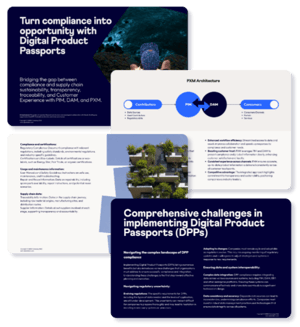
Download the full Digital Product Passport guide
A practical guide for turning Digital Product Passport requirements into better product data, governed assets, and more transparent customer experiences.
✓ What Digital Product Passports are and why they matter
✓ How DPP requirements affect product data, documents, and digital assets
✓ The role of PIM, DAM, and PXM in DPP readiness
✓ What information a Digital Product Passport may include
✓ How to prepare your systems, teams, and stakeholders
✓ Common DPP implementation challenges and how to address them
Created for product teams, sustainability leaders, compliance teams, DAM managers, PIM owners, and digital operations teams preparing for future DPP requirements.
Common questions about Digital Product Passports
A Digital Product Passport is a digital record connected to a product, component or material. It can include information about product identity, materials, sustainability, compliance, usage, repairability, recycling and supply chain traceability.
Companies can prepare by auditing product data and digital assets, improving data quality, connecting systems, defining ownership, engaging stakeholders and making sure product-related documents are governed and easy to retrieve.
PIM helps centralize and structure product data. It can manage information such as materials, product attributes, lifecycle data, regulatory details and environmental information.
DAM helps manage the digital assets and documents connected to products. This includes manuals, certificates, product images, safety documentation, compliance records and other files needed for transparency and traceability.
PXM brings product data and digital assets together to create a consistent product experience across customer touchpoints. In a DPP context, it helps make compliance and sustainability information easier to understand and access.
DPPs touch many areas of the organization, including product, sustainability, compliance, IT, supply chain, marketing and customer experience. Collaboration is needed to ensure the right data, documents and processes are in place.
No. DPP implementation is partly about compliance, but it can also improve transparency, operational efficiency, customer trust and product experience. Organizations that prepare early can turn compliance work into strategic value.
QBank DAM helps organizations manage, govern and distribute product-related digital assets and documents. With structured metadata, permissions, workflows, version handling, audit trails and integrations, QBank can support the content operations needed for DPP readiness.
Are you ready to go further?
Start with a digital asset management demo. Whether you’re starting fresh or rethinking what you have, we help you move forward with confidence.