




-1.png?width=400&name=CMS%20(23)-1.png)

Tagging digital assets is very important for keeping things organized and easy to find, but let's be honest: doing it manually can be a real drag—it's slow, repetitive, and mistakes happen. As your asset library grows, keeping metadata consistent can feel like a big task. Many teams end up spending way too much time hunting for content that's not tagged properly.
But here's the bright side! A modern DAM can take a lot of the tagging work off your plate, saving you time, cutting down on errors, and making your assets a breeze to locate. There are three awesome ways to do this: filename mapping, importing embedded metadata, and integrating with your master data or PIM system.
Let’s dive into how QBank can help automate these tagging processes for you:
Automate tagging with filename mapping
If you already use structured filenames for your assets, why not let those names do the tagging for you? Filename mapping allows you to automatically extract valuable information from filenames and convert it into metadata.
How it works:
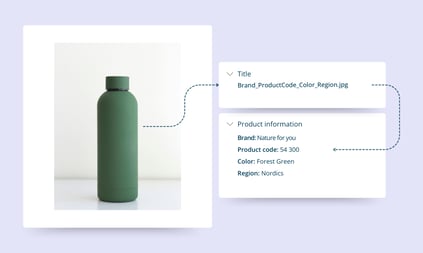
With filename mapping, you can set up rules to identify patterns in filenames and map them directly to metadata fields. For example: Brand_ProductCode_Color_Region.jpg
Can automatically become:
-
Brand: Nike
-
Product Code: 12345
-
Color: Red
-
Region: EU
Why use filename mapping?
✅ Saves you time by automatically tagging hundreds of assets during upload.
✅ Reduces errors as you can avoid typos and maintain consistent metadata.
✅ Improves the searchability as structured metadata means assets are easier to find.
Filename mapping is especially valuable for teams managing large product catalogs, e-commerce content, or campaign materials.
Leverage embedded metadata from your files
Your images likely carry valuable data already—so let’s use it! Embedded metadata imports pull information directly from image files (e.g., EXIF or IPTC data) into your DAM.
How it works:
Photographers or content creators often embed details like location, photographer name, and keywords into image files. QBank DAM can automatically capture and map this information to the appropriate metadata fields during upload.
What are the benfits of using embedded metadata imports?
✅ Let photographers add important metadata right at the start
✅ Pull verified information directly from the file.
✅ Cut down on manual work while keeping all those important details intact.
Collaborate with photographers to establish a metadata template for every shoot. This simple step saves time and ensures that critical information is never lost.
Integrate your DAM with master data or PIM systems
Take automation to the next level by integrating your DAM with your master data or PIM system. This connection allows your DAM to pull product details, descriptions, and attributes directly from your business systems, ensuring consistent metadata across platforms.
How it works:
Sync product information from your PIM or ERP into your DAM, which means your asset metadata will automatically update whenever there's a change in product data. This way, you can be confident that your assets are always tagged with the most accurate and up-to-date information.
Benefits of PIM/MDM/DAM Integration:
✅ Maintain consistent metadata alignment across systems for better accuracy.
✅ Centralize product information to reduce duplication and ensure updates.
✅ Remove repetitive manual tasks to streamline workflows and boost productivity.
This setup is deal for retailers, manufacturers, and brands managing large product portfolios.
Are You Getting This from Your DAM?
Whether you’re choosing a DAM or optimizing your current one, make sure it can:
- Map filenames to metadata automatically.
- Import and map embedded metadata from files.
- Combine multiple automation methods for even smarter workflows.
For our QBank users: Have you tried these features?
If you’re using QBank, these automation tools are already at your fingertips! Haven’t tried them yet? Reach out to our team for tips on how to get started and make your tagging workflows more efficient.
Tag smarter, work faster
The best DAM solutions don’t just store your content—they help you organize it effortlessly. Automated tagging through filename mapping and embedded metadata imports is a game-changer for both new and experienced users. Whether you’re exploring DAM options or looking to unlock the full potential of your current solution, these features can help you save time, reduce errors, and create a more searchable asset library.