




-1.png?width=400&name=CMS%20(23)-1.png)

Across the Medtech industry, many companies still rely on shared drives or sharepoint to manage and distribute regulated content. Product brochures, instructions for use (IFUs), training materials and localized marketing assets are stored in folders and shared with distributors when needed.
On the surface, it works. There is structure. There are permissions. Files are easy to find.
But medical device content carries a different kind of responsibility.
It represents approved claims. It reflects regulatory decisions. In some cases, it guides patient use. When that content moves between markets, distributors and resellers, small gaps in control can quickly become bigger issues.
That’s where basic file storage starts to struggle.
Version control in Medtech is about compliance, not convenience
In medical device organizations, updates are constant. A claim changes after regulatory review. An IFU is revised after a product update. Labeling is adjusted to meet MDR or FDA guidance. Internally, the master file is updated and approved.
The challenge usually begins after that.
Distributors may download a file and keep it locally. Sales teams may save copies on their desktops. Regional offices may adapt documents for local use. Over time, different versions circulate without anyone intending to create confusion.
Shared drives were designed to store files and support collaboration. They were not designed to manage regulated lifecycle control or structured version governance across external partners.
A Digital Asset Management system built for Medtech works differently. It keeps a clear version history, shows what is approved, tracks changes and supports controlled archiving . That makes it easier to see which version is current, and why.
For global medical device companies, that visibility is not about efficiency. It is about reducing uncertainty.
Distribution is often where control weakens
Most medtech companies are disciplined internally. Regulatory teams review content carefully. Marketing works within defined frameworks. Quality processes are well established.
The difficulty often appears once content leaves the internal environment.
When files are emailed or downloaded from shared drives, it becomes harder to know which version is being used in which market. Updates rely on someone remembering to replace an older file. No one is trying to break the rules, it is simply how distribution has worked for years.
This is where DAM portals make a clear difference.
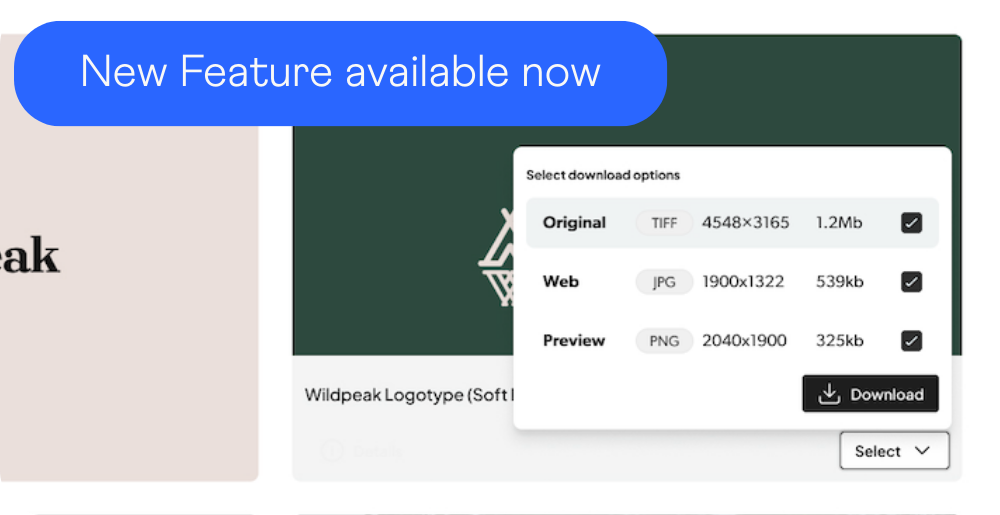
Instead of sending files directly, companies can provide access to approved content through secure, branded portals designed for distributors and partners. These portals present a controlled subset of assets in a clear, professional environment that reflects the manufacturer’s brand while enforcing defined access rights.
Distributors log in and access the material they are allowed to see. If an asset is updated, the portal reflects the change because the source remains central . That means there is less reliance on manual replacement and fewer outdated copies circulating unnoticed.
It does not remove all complexity. But it brings more transparency, clearer version control and stronger consistency to medical device content distribution.
Why DAM for Medtech is about governance
When people talk about “Digital Asset Management,” the focus often lands on faster search or better brand control. Those benefits are real.
But in Medtech, the more important question is governance.
Can you see who accessed a document?
Can you confirm which version was active at a certain time?
Can you control which partners have access to which materials?
A DAM platform with structured rights management, metadata control and integration capabilities makes that possible . It supports compliance in a practical way, without adding unnecessary process.
From storage to something more reliable
Shared drives are useful tools. They just were not designed to support regulated global content distribution.
As medical device companies grow and operate across more markets, the need for clearer control becomes more obvious. DAM platforms with secure distributor portals help bridge that gap. They centralize approved assets, support version control and make distribution easier to monitor.
That does not mean everything becomes perfect overnight. Distributors may still download files. Teams will still work under time pressure. But the foundation becomes stronger.
And in a regulated industry, a stronger foundation makes a difference.
A simple question to reflect on
If you needed to answer a regulator tomorrow, could you clearly explain which version of a product brochure was available in a specific market at a specific time?
If the answer depends on folder names and manual updates, it might be time to rethink the setup.
DAM for Medtech is not about replacing one storage system with another. It is about making compliant content distribution more predictable, more transparent and easier to manage.
If you would like to explore what that could look like in your organization, we are always open to sharing experiences from similar environments.
No big promises. Just practical conversations about improving control where it matters most.
Let´s Talk DAM!