








This: Your next customer might fall in love with your brand. Their AI assistant won't. But with the right information, it might just recommend you.
For decades, brands have worked hard to make people feel something.
We've developed brand personalities, crafted emotional stories, built communities and created experiences that turn customers into loyal fans.
But what happens when your next customer lets an AI agent do the shopping?
Suddenly, your beautiful brand world is only part of the equation. Because while humans connect with emotions and storytelling, AI agents look for something quite different: facts, structured data and consistency.
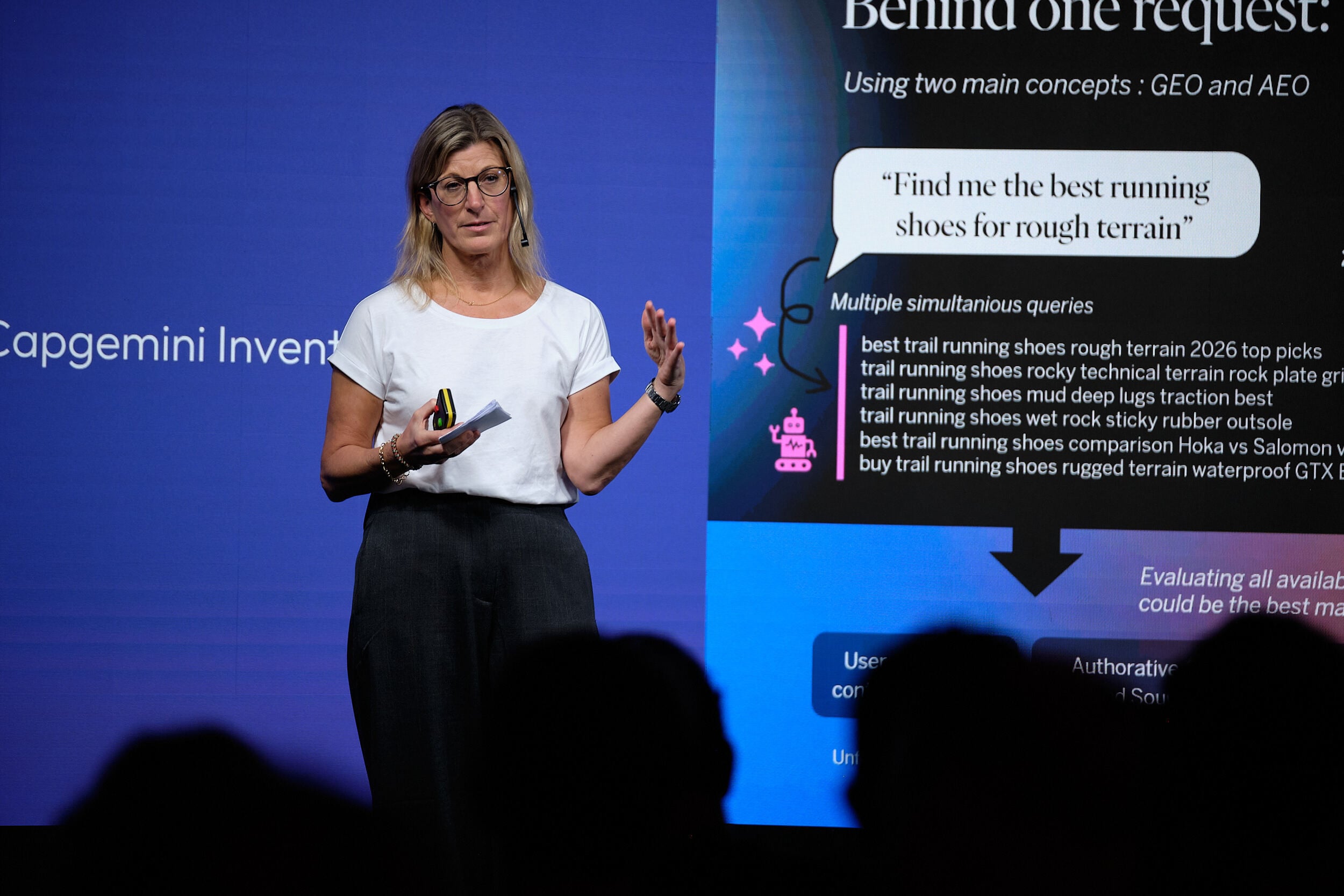
At DAM Day 2026, Anna Trygg, Head of frog Sweden (part of Capgemini Invent), explored what this shift could mean for brands entering the recommendation economy.
And it raises a fascinating question for retail CMOs and CTOs: How do you build a brand that people love and AI agents can confidently recommend?
Here are five ideas worth exploring.
1. Your brand now needs to speak two languages
Think about what makes someone choose your brand over a competitor.
Maybe it's your heritage, your values, your beautiful campaigns or simply the way your products make people feel.
That's the human side of brand building. And it's not going anywhere.
But imagine someone asks an AI assistant to find the best waterproof jacket for a hiking trip in Norway.
The assistant isn't admiring your campaign photography or feeling inspired by your brand film. It's looking for information it can use to compare products.
Materials. Waterproof ratings. Product specifications. Availability. Return policies.
The things we've traditionally considered the less glamorous side of marketing are suddenly becoming incredibly important.
The challenge isn't choosing between emotional storytelling and structured data. It's getting both right.
For retailers, that means your DAM, PIM and other content systems play an increasingly important role in how your brand is represented.
Try this
Pick one of your bestselling products and look at it from two perspectives.
- The human perspective: What makes someone want this product? What emotions, aspirations and brand associations influence the purchase?
- The AI perspective: Can an assistant easily find and understand its features, materials, certifications, availability and return policies?
You might have a fantastic story for the first audience. But are you giving the second audience enough information to recommend you?
2. What if AI tells your brand story instead of you?
Your website has always been a place where you control the experience.
You choose the imagery, the messaging, the inspiration and the journey you want customers to take. But what happens when someone asks an AI assistant about your brand instead?
At DAM Day, we heard about an experiment where an AI assistant was asked to describe IKEA. Instead of relying on IKEA's own content, its answers drew on material from a niche blogger.
That's an interesting thought for anyone responsible for brand perception. Because the information AI uses to describe your brand isn't necessarily coming from you.
Your content now needs to do more than inspire customers. It also needs to be discoverable, understandable and reliable enough for AI-powered systems to use.
And that extends beyond your website. Product information, images, videos, metadata, manuals and policies may all contribute to how AI systems understand your offering.
Try this
Write down five questions you'd love potential customers to ask an AI assistant.
Ask a few different assistants those questions and see what happens.
Which brands are recommended? What sources support the answers? And how accurately is your brand represented?
You might be surprised by what you find.
3. Could your next loyalty program have AI agents as members?
Today, retailers invest heavily in building customer loyalty through memberships, rewards, personalized offers and exclusive benefits. But what happens when customers start delegating everyday purchases to AI agents?
Imagine telling your assistant:
"Order some new basics for the kids. Use my existing memberships and find the best value."
Would it know which loyalty programs you're part of? Could it understand your benefits, apply available discounts and make a suitable recommendation?
And taking that idea one step further, could an AI agent eventually participate in a loyalty program on your behalf? It's a speculative idea, but an interesting one for brands investing in customer retention.
Try this
Bring your CRM, e-commerce and loyalty teams together and imagine a shopping journey where the customer delegates the purchase.
What information would an AI assistant need? How would it recognize membership benefits? What permissions would be required?
You might discover opportunities you hadn't previously considered.
4. Not every purchase needs an emotional connection
Before you start rewriting your entire marketing strategy for AI agents, there's an important distinction to consider.
Not all purchases are created equal. A customer shopping for a luxury handbag, a new car or a once-in-a-lifetime holiday might enjoy every part of the decision.
They're not necessarily looking to delegate that experience.
But a pack of everyday socks? Laundry detergent? Replacement batteries?Those decisions might be much easier to hand over to an AI assistant.
And that creates an interesting challenge for brands selling across multiple categories.
Try this
Divide your products into two groups: purchases customers love making and purchases they'd happily delegate.
For the first group, emotional storytelling, identity and brand preference remain essential.
For the second, consider how easily AI assistants can find, compare and recommend your products.
The balance between emotional brand building and AI readiness may look quite different across your assortment.
5. Meet your potential new marketing metric: Cost to be Recommended
We're all familiar with customer acquisition cost and customer retention cost. But in the recommendation economy, perhaps there's another metric worth considering:
Cost to be Recommended.
What does your organization need to invest to become a brand that AI agents can confidently recommend? It might mean improving product data, structuring metadata, connecting systems through APIs or making important information more accessible.
It's not an established marketing metric, but it raises an interesting question about how brands may allocate their budgets in the future. And you don't need to rebuild your entire technology stack to get started.
Try this
Choose a few commercially important product categories and start monitoring how your brand appears in AI-generated recommendations.
Keep track of where you show up, which competitors appear and what information seems to influence the answers.
Use those insights to identify practical improvements your marketing and technology teams can make together.
Great brands will need both hearts and brains
The rise of AI agents doesn't mean the end of emotional brand building. People will still fall in love with brands. They'll still want beautiful experiences, meaningful stories and products that reflect who they are.
But as more purchasing decisions involve AI, brands will also need to make their value understandable to machines.
That means bringing two disciplines closer together: the creativity that makes people care and the structured information that helps AI understand why your products are worth recommending.
And perhaps that's the most interesting opportunity of all. Your next customer might fall in love with your brand. Their AI assistant won't. But with the right information, it might just recommend you.
Watch the full keynote
Want to explore the recommendation economy further? Watch Winning in the Recommendation Economy from DAM Day 2026 here: https://qbankdam.com/dam-day-26
Curious about building more connected content operations? Explore QBank's Digital Asset Management platform.