




-1.png?width=400&name=CMS%20(23)-1.png)

In the hierarchy of what modern brands need to protect, trust now ranks higher than attention.
You can’t always buy attention. But if you’ve earned trust, people come to you.
They believe in what you show them. They act faster. They stay longer.
But here’s the catch:
Trust isn’t static. It moves.
Across formats. Across teams. Across borders.
It doesn’t live in a single channel or department. It lives in the sum of all interactions, with your content, your assets, your brand presence.
It lives in experience. And experience is in motion.
Trust is no longer a campaign. It’s a system.
Once, brand trust was cultivated slowly. Through crafted messaging, well-placed campaigns, and polished touchpoints.
Today, it’s different.
Now, trust is more operational than emotional. It’s practical. It’s earned through precision. By getting the right thing to the right person at the right time, over and over again.
It’s won or lost in:
-
the download link someone clicks in a press release
-
the product sheet a partner pulls just before a pitch
-
the internal portal a support team relies on to solve an urgent customer issue
The user doesn’t care if your content was somewhere.
They care if they got what they needed, accurate, on-brand, and now.
When brands fail to deliver that, trust slips.
And they rarely know it’s happened.
Experience ≠ design. It’s delivery.
Brand experience isn’t just how something looks. It’s how it works.
The interface. The flow. The ability to find, understand, and act without friction.
Here’s the modern challenge:
-
You’re operating across departments with different needs
-
Your content is distributed across cloud drives, inboxes, teams, and territories
-
Audiences aren’t centralized, they’re specialized, and expect self-service
This creates fragmentation.
And fragmentation is a trust killer.
If your press team is using a two-year-old logo...
If your regional partners are working from PDFs that don’t match your messaging...
If your service reps are improvising with outdated training docs...
You're not just off-brand.
You're untrustworthy.
Not because your intent is wrong. But because your delivery failed.
The trust gap: when scale outpaces structure
Modern brands don’t struggle to create content.
They struggle to deliver it, consistently and correctly, at scale.
Growth outpaces governance.
Teams move fast, content multiplies, systems stay siloed.
And suddenly, the brand experience becomes a patchwork. Some users get the latest. Some don’t. Some portals work. Some links break. Some assets are controlled. Others are forwarded around in email threads.
You may never hear the complaint.
But the experience sends a message loud and clear: this brand doesn’t have it together.
The new mandate: deliver trust like a product
To meet modern expectations, brands need to treat delivery like part of the product.
It’s not the cherry on top, it’s the path people walk on.
That means building infrastructure that’s:
-
Consistent – the same experience for everyone, no matter who or where they are
-
Context-aware – different needs require different views, without duplicating effort
-
Dynamic – changes should be live instantly, not weeks later
-
Controlled – what’s approved is visible; what’s not, isn’t
This isn’t about controlling everything. It’s about designing for clarity and consistency.
Because freedom without structure isn’t empowerment. it’s just noise.
Enter: the branded delivery layer
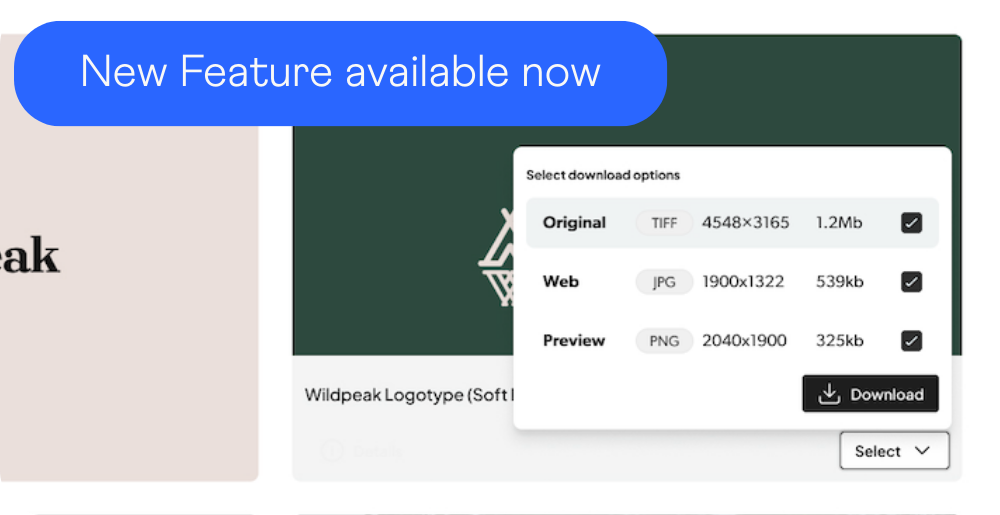
This is where tools like QBank’s Branded Portals come in, not as a feature add‑on, but as infrastructure for trust.
They act as a delivery layer that travels with your content.
Not a static folder. A dynamic, on-brand experience, customisable by audience.
Here’s what they quietly solve:
-
Only approved content is visible, to the right people – governed by metadata, permissions, and SSO
-
Fast, findable, on-brand – clean search, clear structure, brand-aligned UI
-
Update once, publish everywhere – thanks to QMO/CDN-powered delivery
-
Scale without chaos – spin up a press portal today, a partner portal tomorrow, all on the same foundation
They don’t add noise. They remove friction.
So trust becomes the default at every step, for every audience.
Trust doesn’t sit still. Neither should your experience.
Your brand is constantly in motion.
Assets change. People change. Expectations rise.
The question isn’t whether you have trust.
It’s whether your systems are designed to keep it moving.
→ Ready to explore branded delivery as a trust system?
Start with one portal. Grow from there.
About the author:
Linda Nygård is Head of Growth at QBank, where she leads marketing and customer success with a focus on long-term value and client impact. With a background in digital transformation and data-driven growth, she’s passionate about turning DAM strategies into real results. Linda is also a firm believer that good governance isn’t bureaucracy, it’s freedom. When done right, it empowers teams, builds trust, and makes AI (and people) perform at their best.